Great writers often convey their main message through the use of a metaphor or an analogy, but genius authors usually express several important ideas through a single story. An example of this would be the challenge of the three caskets in Shakespeare’s comedy The Merchant of Venice. In the story, Portia’s suitors must choose the gold, silver, or lead casket, and if a suitor successfully chooses the lead casket, he is allowed to marry her. However, if the suitor chooses incorrectly, then he is not allowed to marry anyone in his life. The plan behind the caskets was significant as it not only helped Portia choose the perfect husband but also hinted to the readers a multitude of important reminders.
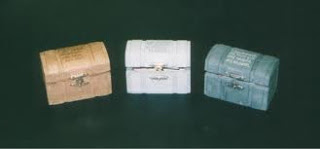
As seen in the play, only Bassanio selected the correct casket while two other suitors selected incorrectly. In Portia’s eyes, Bassanio was the perfect husband, and she despised the previous two suitors who came before him. This indicates that the challenge was successfully designed as it helped Portia eliminate the men she did not want and find the man that she loved. By even setting up a challenge that had such a large drawback upon failure, it eliminated all those suitors who would be unwilling to risk everything for Portia. Those who backed off from the challenge of the caskets never truly loved Portia as they were too afraid about their personal future. Therefore, they were not suitable to be a caring husband for Portia. From this, Shakespeare reminds readers that lovers should not only be ready to give up everything for one another but that a person must be ready to risk everything to gain what he or she really wants. Although those who were unwilling to choose a casket definitely did not love Portia, it did not guarantee that all those who chose would necessarily be a good husband. In fact, those who think highly of themselves are bound to take the challenge as they would be confident that they could select the correct casket. This is exactly what happened to the Prince of Morroco and the Prince of Aragon, the two suitors who chose incorrectly. Both of them were arrogant and fell prey to the gold casket and silver casket respectively. The Prince of Morroco believed that he was the best and was worthy of the best. As a result, he incorrectly selected the gold casket as it appeared the nicest, and he thought that the other caskets were unworthy of him and Portia. The Prince of Aragon picks the silver casket out of arrogance of being the smartest. He chose the silver casket out of caution as he was confident that the gold casket was a trap. Unfortunately, he, too, looked down on the plebian appearance of the lead casket. Therefore, the arrogance of both the princes ultimately made them poor selections for being Portia’s husband. With both of the suitors’ downfall, Shakespeare teaches the audience the classic lesson of not judging a book by the cover and the humiliating consequences of being too arrogant. On the other hand, Bassanio selects the correct casket as he is able to acknowledge that true beauty comes from the inside. This shows his willingness to be humble and that he was not greedy as he did not choose the luxurious-looking boxes. Such characteristics in addition to his love for Portia made him the perfect husband for her.
While the challenge of the three caskets may not be the climactic scene in The Merchant of Venice, it still holds a large significance to the play as it selected the perfect husband for Portia and to the audience as it communicates several important lessons that readers can take away.
Works Cited for Pictures
Portia. “The Merchant of Venice.” The Merchant of Venice, Blogger, 22 Apr. 2012, merchantofvenice-2r2.blogspot.com/2012/04/lead-silver-gold-portia-cant-get-to.html.
Reflection: This was my favorite mini-essay to write as writing this essay really forced me to think about the significance of the caskets, and the more I thought about, the more I realized the genius behind Shakespeare’s plan. The analogy of the three caskets is very simple yet there was so much meaning and purpose behind it. As a result, I found it very enjoyable to be able to write about it and share what I’ve come to realize about the three caskets.
 Samuel Kwan's Writing Portfolio
Amazing! You communicated really well all the reasons why Bassanio was the successful one. Very interesting hook as well, good job 😀
LikeLike
Thank you!
LikeLike